Getting fourteen cousins, three sets of grandparents, and a handful of toddlers onto one safari sounds hard. It isn’t, if you plan the logistics before you plan the pretty parts. This large group safari Kenya reunion guide gives you the numbers other sites skip: how many vehicles you actually need, which camps will hand you the whole property, and what a reunion really costs per person.
Why a Large Group Safari Kenya Reunion Works for Family Trips
A safari solves a problem every reunion has. Everyone is busy, everyone lives somewhere different, and nobody wants another wedding-hall dinner. A week in the Maasai Mara or Amboseli gives three generations the same shared experience at the same time, with built-in downtime between game drives so nobody burns out.
The trade-off is real, and worth naming early. Large groups rarely agree on one budget tier. Grandpa wants air conditioning and a proper bed. Your cousin’s family of five wants to keep costs down. The fix isn’t forcing consensus. It’s booking adjoining room categories at the same camp, so everyone eats dinner together but sleeps in what suits their budget. More on that below.
If you’re weighing a smaller trip first, our post on planning a group trip with friends covers the same logistics at a gentler scale.
Best Parks and Conservancies for Big Groups
Not every park handles 20 people well. Some get crowded at popular sightings, which is hard on kids and harder on grandparents who don’t want to stand in a queue of vehicles for a lion.
Maasai Mara has the widest range of camp sizes and the best game density, especially July through October during the wildebeest migration. Amboseli is flatter and easier for older travelers, with Mount Kilimanjaro as a backdrop for every photo. Lake Nakuru is close to Nairobi, good for a shorter add-on day with young kids. Tsavo West and East are less crowded and good value, though drives between sightings are longer. Ol Pejeta and Laikipia conservancies allow night drives and walking safaris, which older teenagers love, and they hold rhino sanctuaries that make for an easy, low-pressure wildlife day.
For a reunion, we usually recommend anchoring in one Laikipia or Mara conservancy for four or five nights rather than moving the whole group every two days. Fewer transfers means fewer chances for someone’s luggage, or someone’s toddler, to have a meltdown.
Accommodation Strategy: Exclusive-Use Camps vs Block-Booking
This is where reunions succeed or struggle, so it’s worth being specific.
Exclusive-use camps let you take over the entire property, private vehicles, guides, and staff included. Community-owned lodges like Il Ngwesi on Lewa’s border in Laikipia sleep around 24 guests across six bandas and are built for full buyouts. Sirikoi and Ol Malo, also in Laikipia, offer similar full-property takeovers for groups in the 16 to 24 range. In the Mara conservancies, several tented camps with six to nine rooms will do an exclusive buyout on request. Pricing for these usually needs a direct quote rather than a website rate.
Block-booking a lodge means reserving most or all rooms at a larger property without exclusivity. This works well for groups over 24, where a true exclusive-use camp would be too small. Bigger lodges near the Mara Triangle or in Amboseli can hold 30 to 40 guests across standard, family, and suite categories. This solves the budget-tier problem directly. Grandparents book the suite, young families book a connecting family room, and everyone eats at the same table.
Whichever route you pick, ask early whether the camp offers family rooms or interconnecting tents. Many Mara and Amboseli properties added these in the last decade specifically for multi-generational bookings. Availability is limited, though, and books out fast in July, August, and December.
Vehicle and Transport Logistics for Large Parties
This is the detail almost nobody publishes with real numbers, so here it is.
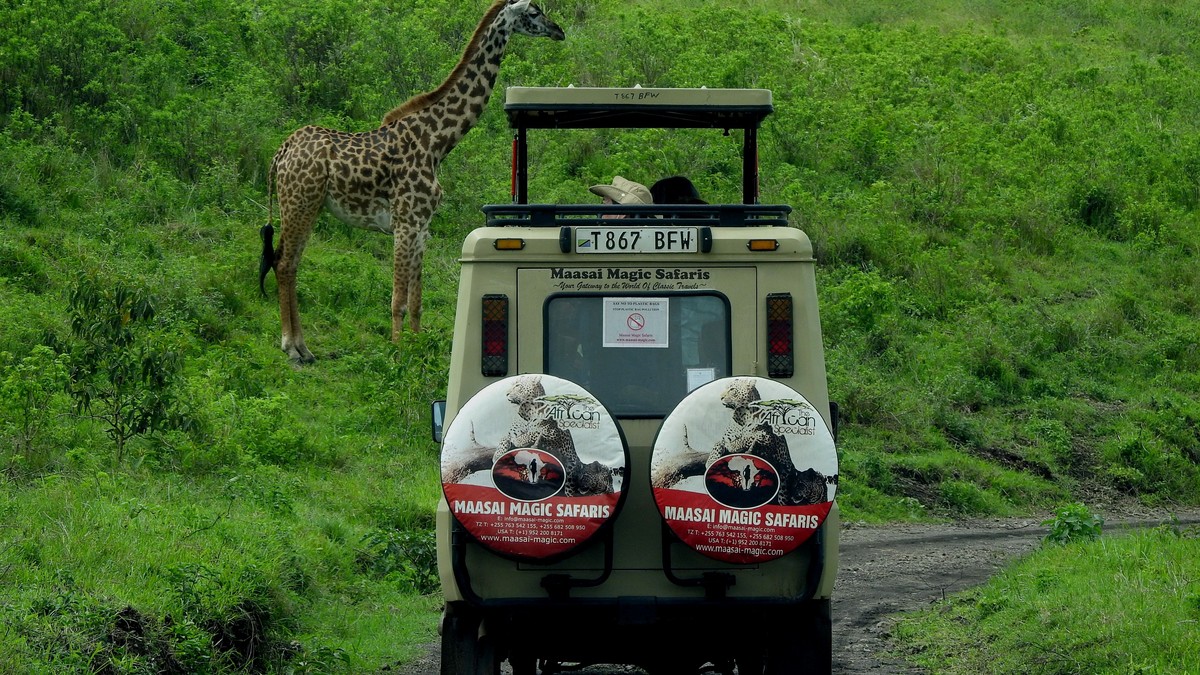
A standard safari Land Cruiser seats 6 to 7 guests comfortably with a window seat each, which matters for photos and for kids who get carsick in the middle row. Larger safari vans hold 7 to 8 but have less headroom for standing to photograph.
| Group size | Vehicles needed | Typical setup | Approx. daily vehicle cost (USD, indicative) |
|---|---|---|---|
| 8-10 people | 2 Land Cruisers | 4-5 per vehicle, one spare seat for gear | $180-250 per vehicle |
| 14 people | 2 Land Cruisers | 7 per vehicle | $180-250 per vehicle |
| 20 people | 3 Land Cruisers | 6-7 per vehicle | $180-250 per vehicle |
| 30 people | 4-5 Land Cruisers | 6-7 per vehicle, one kept spare | $180-250 per vehicle |
Keep one seat free per vehicle if you’re traveling with anyone under six, since car seats and quick exits for bathroom stops need room. Assign the same guide and vehicle to each family group for the whole trip. Kids do better with a driver they recognize by day three, and it makes splitting park fees and tipping simpler at the end.
Road transfers matter too. Nairobi to the Maasai Mara is about 270 km and takes 5 to 6 hours by road, or roughly 45 minutes by light aircraft from Wilson Airport. Nairobi to Amboseli is around 240 km, about 4 to 5 hours by road. For groups with grandparents or babies, we almost always recommend flying rather than driving, even though it costs more per person.
How Big Is “Large”? Group Size Considerations
Under 8 people, one vehicle and a standard shared or private itinerary works fine. Between 8 and 16, you’re in classic reunion territory, and this is where our private vs. group safari comparison is worth reading, since a fully private itinerary starts to make more financial sense than mixing with strangers. Above 16, you’re managing camp logistics as much as wildlife logistics, and exclusive-use or block-booking becomes the deciding factor rather than a nice-to-have.
Cost and Pricing Per Person for Group/Reunion Safaris
These figures are indicative ranges, since exact pricing depends on season, camp, and how far ahead you book. Expect three broad tiers for a 5 to 6 night reunion safari including accommodation, meals, park fees, and shared vehicles.
Budget tier: roughly $250-350 per person per night, using tented camps or smaller lodges outside peak season, shared vehicles across the group.
Mid-range tier: roughly $400-600 per person per night, covering most Mara and Amboseli tented camps with en-suite tents and good food, private vehicle per family.
Luxury tier: $700 and up per person per night, for camps like Angama Mara or exclusive-use conservancy properties with private guides and full buyouts.
Park fees sit on top of accommodation. Maasai Mara conservancy fees run roughly $80-200 per adult per day depending on which conservancy or the main reserve. Amboseli and Lake Nakuru, both run by Kenya Wildlife Service, charge closer to $60 per adult per day. Children usually pay half.
Traveling as a bigger group does lower some costs per person, mainly vehicle hire and guide fees, which split across more people. It rarely lowers accommodation cost per person unless you negotiate a group rate directly with a camp. That’s easier to do the further ahead you book.
Best Time of Year for a Reunion Safari
July through October brings the wildebeest migration to the Mara and the best game viewing. It’s also peak season, peak prices, and the hardest window to secure family rooms for a big group. January and February offer excellent weather, calving season in some areas, and noticeably lower rates. Avoid late March through May if you have older travelers or young kids. The long rains make some roads difficult, and a few camps close entirely.
Activities That Work Across Ages
Game drives twice a day suit almost everyone, but build in rest time between them, especially for young kids and grandparents. A sundowner picnic on a riverbank works for every age and every energy level. Guided nature walks in conservancies like Ol Pejeta are gentle enough for teenagers and slow enough for grandparents. A cultural visit to a Maasai village near the Mara gives kids something hands-on. And one full free day at the pool, with no game drive scheduled, saves more reunions than any itinerary trick we know.
How to Plan and Organize a Group Safari
Start with a headcount and a rough budget range per family, not a single number everyone must hit. Book camps and internal flights 9 to 12 months ahead for July, August, and December travel, since family rooms are the first thing to sell out. Our post on how far in advance to book your safari walks through the timeline in more detail. Appoint one family member as the point of contact for headcounts and deposits, since chasing 20 individual payments slows everything down.
The Valley Safaris Difference
We plan reunions the way we’d plan our own family trip. That means we tell you honestly when a camp is too small for your group, or when block-booking beats exclusive use for your budget spread. We build the vehicle math before we quote a price, not after, so you know exactly how many Land Cruisers and guides your group needs. We’re based in Kenya and visit these camps ourselves. That’s how we know which family rooms actually connect and which ones just say they do on a website. We’ve watched enough reunions succeed, and a few struggle, to know the difference is almost always in the details other operators skip.
Ready to Plan Your Reunion?
If you’re weighing dates, headcounts, or which conservancy fits your family best, we’re happy to work through it with you. Browse our group safari packages or reach out through our contact page to start building your reunion itinerary.